
Benefits of Project Management Training
Project management is all about the effective management of change. It can benefit an organisation in many ways because it provides a systematic approach to managing and controlling different types of projects and different types of change.
What are the benefits
Professional project management can ensure that organisations of all sizes reap the benefits of a well-controlled, project-based approach to business. Some of these benefits are:
- Develop a full understanding of the project goals, objectives and benefits before committing significant resources. This ensures that only the projects which are expected to provide benefits exceeding the investment of time and money are initiated.
- Ensure that the project proceeds effectively through all the essential phases, from concept through to completion. This makes sure the project is properly reviewed by the stakeholders at key stages including initiation and final acceptance.
- Provide a rigorous approach to defining a realistic, but still challenging, timescale and budget for completion of the project.
- Establish a structured approach for clearly defining roles and responsibilities for the delivery of the project and its work packages. This is critical to building commitment to the project objectives.
- Implement a systematic process to manage changes to the project scope or objectives. This minimises the risks associated with change to the end-product or to the benefits for the sponsors.
What people say about training courses
A survey of past delegates who have attended Parallel’s project management training courses has provided further insight into the benefits of project management training in terms of acquiring new skills, developing existing skills and gaining practical advice to implement in the day-to-day work environment.
When questioned, almost 90% of course attendees believed that their organisation had benefited from their attending the course. Specific benefits mentioned by delegates are:
- Having a common language to describe issues within a business, which has helped allow clearer definitions of areas for development versus best practice.
- Using people to successfully deliver projects.
- With everyone following APM PMQ it is helping bring a consistent baseline knowledge base to the business.
- Improving communication between stakeholders and improved awareness and implementation of leadership skills/qualities.
- It’s helped when certain tools and techniques have come up that were discussed on the course which means that I had a head start on our competitors.

Benefits in the everyday work environment
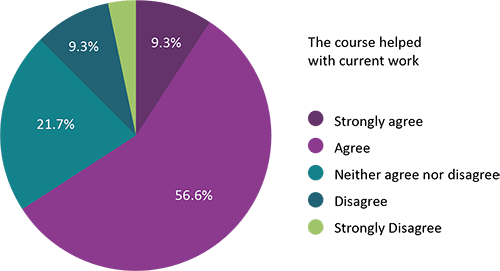
Formal training was seen to be particularly useful for improving communication between stakeholders and developing a better awareness of the leadership qualities required in a project manager. In meetings and when discussing project management tools and techniques, a formal training course helped those involved to better understand what was being discussed and to ensure everyone was working from a consistent knowledge base. Training also helped when it came to putting together and managing the project team and dealing with the different characteristics of project teams. Many delegates viewed the professional qualifications obtained as a necessary part of progressing up the career ladder, as they equip project managers with a thorough understanding of the essential attributes of a successful project.
Where courses were undertaken by a group from the same organisation, the common learning of a standard method such as APM PMQ helped in developing a consistent approach to managing projects using a common language. This common language to describe issues within a business enabled clearer definitions of areas for development versus best practice.
On a practical level, the courses provided real-life scenarios to hone skills with software tools and equip delegates to truly take advantage of features such as PERT charts and critical paths. Courses offered powerful insights into establishing stakeholder requirements and how to satisfy them by spending more time with key stakeholders and focusing on the critical success factors for project managers.
Developing existing skills
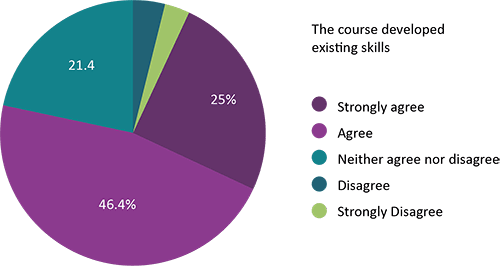
Where respondents to the survey, who participated in a range of APM courses, PRINCE2 Practitioner and PMP Certification courses, felt that the course had also been beneficial in developing their existing project management skills, the areas in which they felt they had gained most included:
- Dealing with change
- People management
- Stakeholder management and engagement
- Communication with stakeholders
- Communication with project teams
- Planning
- Leadership
- Developing critical success factors
- Managing conflict
- Managing quality
Learning new skills
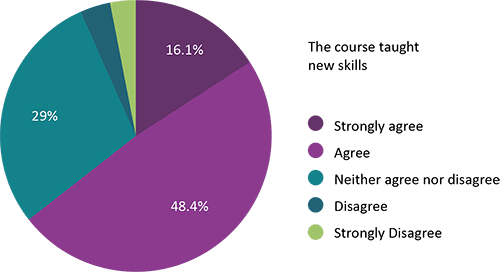
Clearly, every delegate would also expect to learn new skills on a training course as well as reinforcing existing skills and being able to take a fresh perspective on what they already know.
Typical new skills learnt included:
- Active risk management
- Planning, implementing and monitoring projects
- PERT charts
- Costing
- Detailed knowledge of scheduling
- The procurement process
- Earned value management
The survey of past course attendees further revealed that many delegates gained a clearer understanding of project management terminology with which they were already familiar. The courses reinforced their understanding and ability to use a common language to discuss project management subjects. This enabled them to better capture and communicate project requirements and success criteria, and to obtain concise consensus on what would constitute a successful project from the perspective of the stakeholders, project manager and customers.
But for many, one of the major benefits of the training course was formalising the topics that they already understood, putting these topics in context with real case studies and improving their all-round project management skills.
In areas such as risk management, breakdown structures, earned value management and costing, they learnt how to put the theory they already knew into effective practice and to make the most of the people available on their project teams to deliver successful projects.
Continuous course improvement
Over 96% of those who have previously attended a course with Parallel Project Training believe that project management skills have become more important in recent years, so Parallel are always looking at ways to improve their training courses. They listen to the feedback of course attendees and incorporate improvements into their current training courses, including:
- Using a wider range of case studies – although the recurring case study in the study guide ‘How to Pass the APM PMQ’ remains useful for a consistent approach.
- Ensuring the minimum level of prior knowledge has been achieved on an introductory level course or with a period of independent study before attending the more advanced level courses such as the APM PMQ, so that the learning process is not more challenging than necessary.
- Making example questions available prior to the start of the course.
- Extending the periods of role play for additional practice of a range of skills within a monitored environment.
- Placing more emphasis on very complex projects during the courses aimed at achieving advanced qualifications.
The hidden costs of on-the-job training
Many project managers have gained their experience the hard way; through trial and error. However this can cost an organisation dearly in wasted effort, cost, poor customer reputation, stress and failure to deliver the full benefits of a project. Ongoing development and training courses can fast track learning the competencies required to deliver successful projects reliably and avoid the hidden costs associated with learning on the job.
Parallel Project Management Courses use active learning techniques to develop not just the necessary skills and knowledge to manage complex projects, but also the attitude and behaviours required to underpin these competencies.
We're with you all the way

Individual
Individuals looking to enhance career prospects with professional training.

Group
Group training to enhance team project management skills.

Corporate
Delivering APM courses and tailored training to meet your business needs.

Project management training benefits at a glance
Improved Efficiency
Enabling a project manager to accurately determine the requirements of a project and to assess the available resources and make best use of those resources. This ensures the scope, schedule and budget are accurately set from the start.
Enhanced Confidence
Learning about how to identify risks in projects, and how to manage, them helps build a project manager's confidence and ability to manage projects effectively.
Consistent Delivery
Confident, efficient project managers who are able to deal effectively with risks will consistently and reliably deliver successful projects avoiding wasted time, effort and money.
Customer Satisfaction
When the tools and techniques are used to deliver projects reliably; deliver what was required and within budget then the customer will be satisfied.
A Fresh Perspective
Experienced project managers can improve their PM knowledge with new techniques but can also simply learn to approach a familiar scenario with a new perspective.
Behavioural Changes
Project Management is not just about experience, tools and techniques but also learning how to influence others and resolve conflict.
Project management trainers with real world experience
Project management is a complex profession and there’s a difference between knowing the theory and understanding the reality. It is possible for someone to know all of the theory, but lack the experience to back up how those principles are applied in the real-world. That’s why it’s important to look at the calibre of the trainer when starting your training journey.
For any UK project professional, making the right choice of training provider is critical to not only pass any exam and gain a professional qualification (if desired), but to receive guidance and gain practical insights from someone with first-hand industry expertise of complex scenarios.
The majority of PM courses available are led by instructors who are excellent in all aspects of teaching project management theory. However, when it comes to real on-the-job experience and offering real insights from the workplace they simply can't. This is an important distinction that it is worth remembering, and a core pillar of the Parallel Project Training philosophy.
At Parallel our trainers are not simply educators; they are seasoned professionals in project management. They have already managed challenging stakeholders, navigated the complexities of corporate politics, and faced a wide range of unpredictable problems that a standard training course alone cannot fully prepare you for. This is the depth of experience that raises Parallel training programmes from simply a qualification to a transformative, professional development experience.
We train your project managers in-house based on APM (Association for Project Management) courses or develop bespoke project management courses tailored to your internal frameworks and particular project, portfolio or programme challenges.
Some of Our Highly-Skilled Project Management Trainers

Ruth Phillips
Ruth is an award-winning programme and project management professional with over 25 years of experience in leading strategic change initiatives.

Lisa Regan
Lisa is a dedicated project management training consultant with a strong academic background and over 15 years of practical project experience across diverse sectors.

Carmen Campos Castellanos
Carmen is a highly skilled project management consultant with a robust background in industrial engineering and extensive experience managing complex projects.